
Your net worth is the clearest single answer to “am I getting ahead?” It takes about ten minutes to work out the first time, and you don’t need to link a bank account to do it.
Step 1: Add up what you own
List everything you own that has real resale value, at what it’s worth today:
- Cash and savings: every bank and savings account balance.
- Investments: brokerage accounts, ETFs, stocks, crypto, and registered or tax-advantaged accounts such as a 401(k) or IRA, TFSA or RRSP, ISA or SIPP, or superannuation.
- Property: your home and any other real estate, at a realistic market value. Recent sales of similar homes nearby are a better guide than the price you paid.
- Vehicles: what you could sell them for now.
- Valuables: jewellery, art or collectibles that you could genuinely sell.
Leave out everyday household items and anything with only sentimental value. If you couldn’t sell it for a meaningful amount, it doesn’t belong here.
Step 2: Add up what you owe
List every debt at its exact current balance:
- Mortgage: the remaining balance, not the original loan.
- Student loans: the total across all of them.
- Credit cards: the full balance on each card.
- Car loans and leases: the remaining balance.
- Lines of credit and personal loans: anything else you owe.
Log in and use the real numbers rather than estimates. A rough guess on your debts can hide the very progress you want to see.
Step 3: Subtract
Net worth = what you own − what you owe.
This first number is your baseline. It may be lower than you hoped, or even negative. That’s fine. You now have an honest starting point, which most people never get.
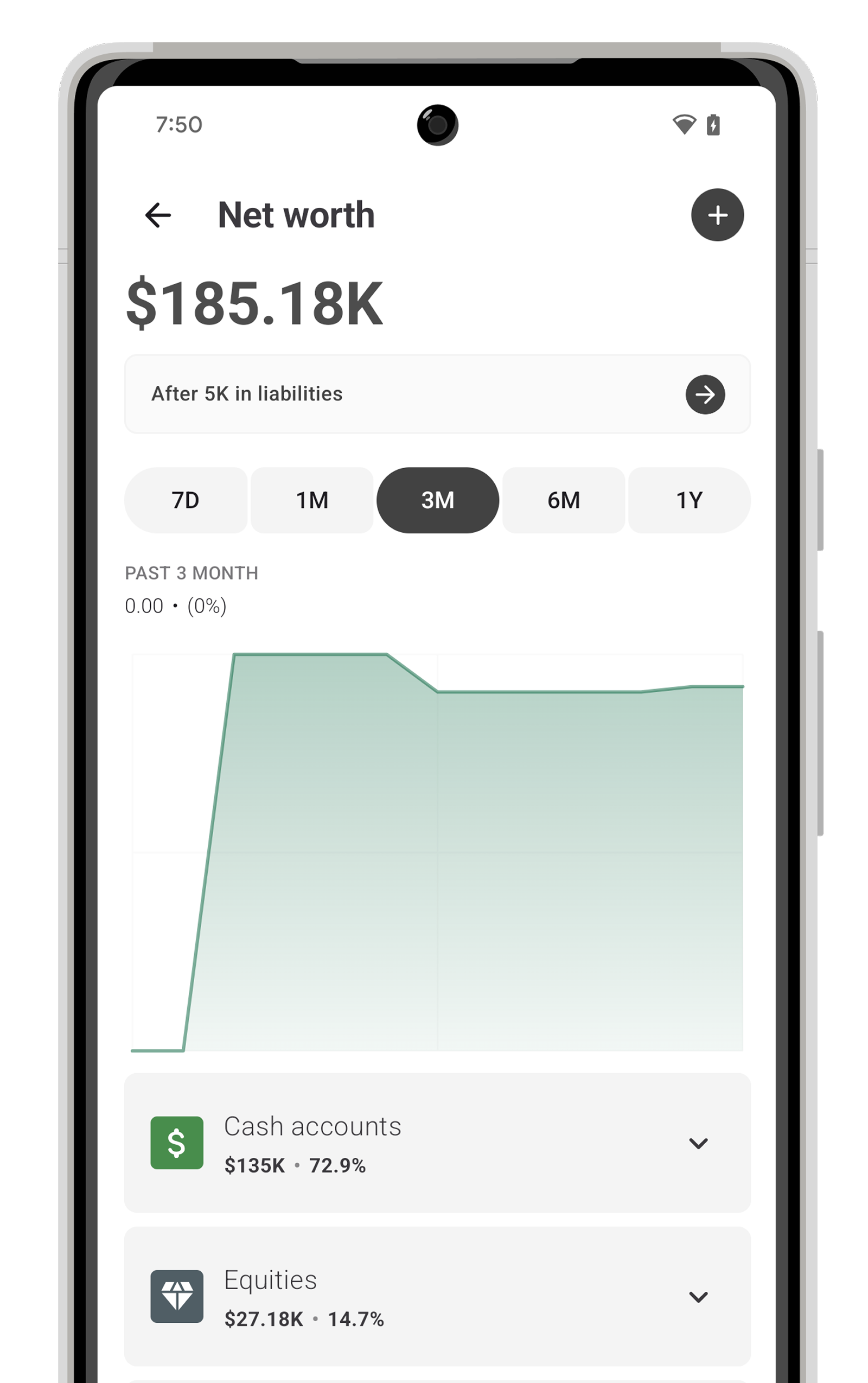
Step 4: Update it on a schedule
Pick a rhythm and stick to it:
- Monthly (recommended): enough to see progress and catch problems early.
- Quarterly: fine if you’re busy.
- Yearly: better than nothing, but slow to give you feedback.
Put a reminder in your calendar. The fewer numbers you have to update by hand, the more likely you’ll keep going, which is why Worthy updates stock and crypto prices, amortizes your mortgage and accrues interest on its own.
Step 5: Watch the trend, not the month
Your net worth will move around. Markets dip, home values shift and a big purchase lands in one month. That’s normal.
What matters is the direction over six months, a year and five years. If the line is heading up over time, you’re winning, even if some months go backwards.
Common mistakes
“I don’t earn enough to bother.” Net worth is about what you keep, not what you earn. It’s useful at any income.
“My net worth is negative, so what’s the point?” That’s exactly when tracking helps most. It’s the only way to see yourself climbing towards zero and past it.
“It’s too complicated.” You need two lists and one subtraction. An app makes the updates faster, but a sheet of paper works for the first try.
“I’ll start when things are more stable.” Measuring is what creates the stability. Start with today’s numbers, however they look.
Using what you paid instead of what it’s worth. Count your home, car and investments at today’s value, and your debts at today’s balance.
Start with today’s numbers
Work out your baseline today, then update it next month. If you want a reference point, try the free net worth by age calculator, and if you’d like the updates to take care of themselves, see how the tracking tools compare.