Mint Had 20 Million Users. Then It Was Gone.
On March 23, 2024, Intuit shut down Mint, the most popular budgeting app in America, with more than 20 million users. Accounts were funneled into Credit Karma, another Intuit product. Most of what people actually relied on (transaction history, budgets, goals) didn’t come along for the ride.
The app you trusted with a decade of your financial life can vanish on a corporate roadmap decision. And when it does, the real question isn’t “which app do I switch to?” It’s a quieter, more unsettling one: where did all of that data go?
Your Data Doesn’t Die When the App Does
Here’s the part most people miss. When a company shuts down or goes bankrupt, your data usually isn’t deleted. It gets counted as an asset and sold off with everything else.
In 2025, the DNA-testing company 23andMe filed for bankruptcy, and the genetic data of roughly 13 million people went up for sale. A court approved a $305 million sale of that database, and state attorneys general urged customers to delete their information before it changed hands. Genetic data. Sold in a bankruptcy auction to the highest bidder.
And it’s not new, or limited to DNA. When RadioShack went bankrupt in 2015, it listed more than 65 million customer names and addresses among the assets it wanted to sell, even though its own privacy policy had promised it would never sell customer data. It took the FTC and 38 state attorneys general stepping in to stop most of it.
A privacy promise is only as durable as the company making it. Bankruptcy court doesn’t care what the marketing page said.
Why “Free” Finance Apps Need Your Bank Login
Free apps aren’t charities. If you’re not paying, the product being sold is the data you generate, and in personal finance, that data is unusually valuable.
Most bank-linking apps connect to your accounts through a middleman called Plaid. In 2022, Plaid agreed to pay $58 million to settle claims that it used people’s bank login credentials to collect more financial data than it needed: deposits, withdrawals, transfers, purchases. The settlement covered an estimated 98 million people. Some of them had never even knowingly connected an account.
That’s the model. To show you your money, these apps first have to see all of it: every transaction, continuously. And that pipe into your financial life is worth far more than any subscription fee.
You Were Never the Customer
Mint, RadioShack, 23andMe: different industries, same lesson. When your data lives on someone else’s server, you don’t really control what happens to it. You control it right up until the moment a shutdown, an acquisition, or a bankruptcy takes that decision out of your hands.
You can delete your account, and trust that they honored it. You can read the privacy policy, which can be rewritten by whoever buys the company next. Every one of those safeguards depends on a company continuing to exist, and continuing to care. Neither is guaranteed.
How Worthy Is Built Differently
Worthy makes the whole problem structurally impossible. Not by promising to be trustworthy, but by never holding anything it could betray.
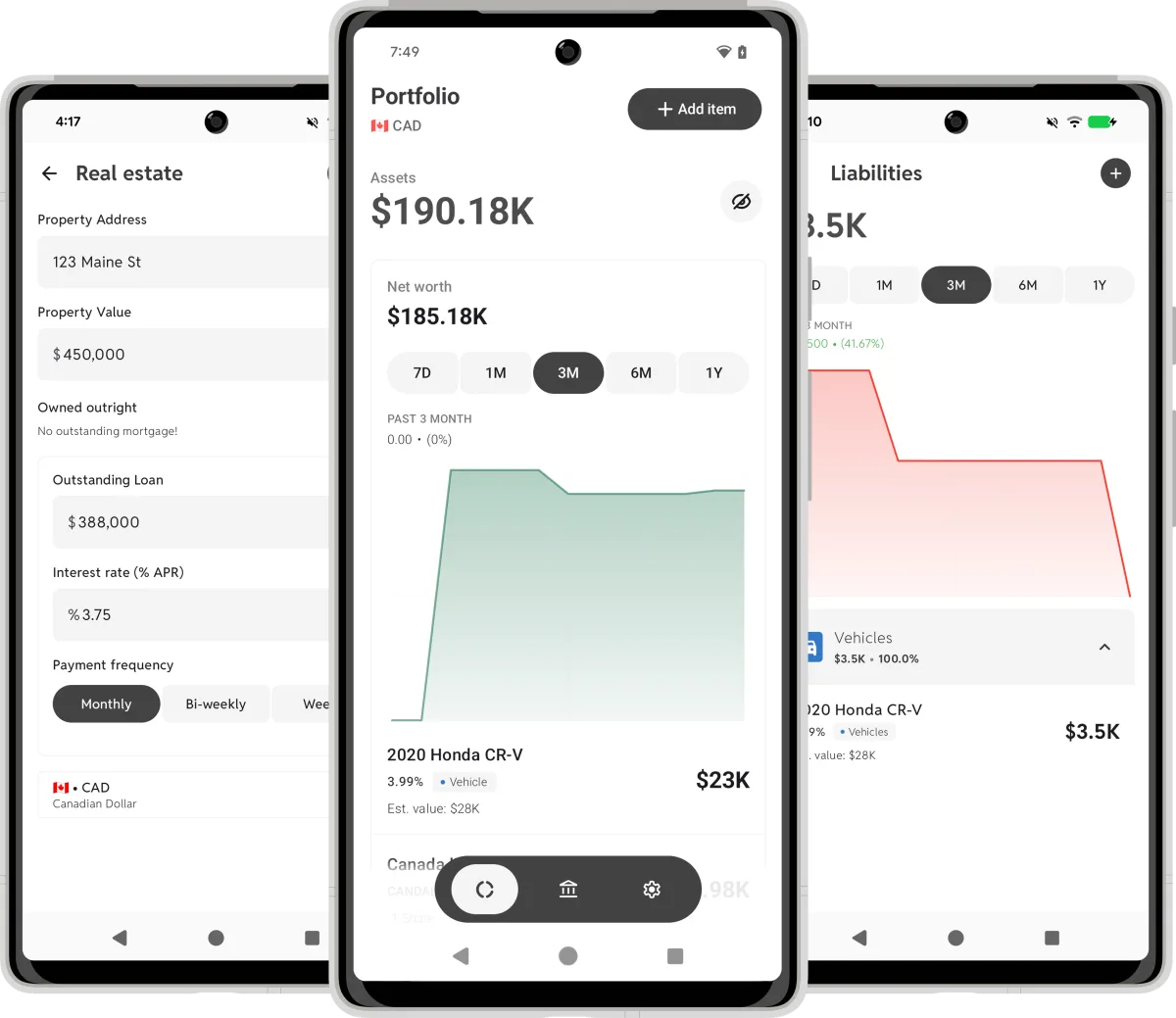
- It’s on your device. Your numbers live in the app on your phone. There is no Worthy server storing your net worth, so there is no database to breach, migrate, or auction.
- There’s no account. You don’t sign up. No email, no login, nothing tying your financial data to your identity in a system we control.
- No bank linking. No Plaid. You type in your balances. Nothing connects to your bank, so there’s no continuous feed of your transactions going anywhere. Your stock and crypto prices still update automatically through free market-data services like Alpha Vantage and EODHD, using your own free API key, so “manual” never means out of date.
- You pay once. Worthy is a one-time purchase, not a subscription, and not “free.” That means you’re the customer. The thing being sold is the app, not you.
The test is simple: if Worthy disappeared tomorrow, what would happen to your data? Nothing. It’s already on your phone, and it never left. There’s nothing on our end to shut down, sell, or lose.
If you’re leaving an app that’s winding down, it helps to see the difference directly: Worthy vs Mint, Worthy vs Monarch, or why we built a net worth tracker with no bank connection in the first place.
What to Look For in a Finance App That Respects You
Before you hand any app your financial life, ask four questions:
- Where does my data live, on my device or on their server?
- Does it require a bank connection? If yes, a third party is watching your transactions.
- How does it make money? “Free” usually means you’re the product.
- What happens if it shuts down or gets acquired? If the answer isn’t “nothing, my data is mine,” keep looking.
$16.99 one-time. Yours forever.
"I've been wanting a way to summarize all of my accounts and portfolios across multiple institutions, without a direct connection like Plaid. Once a week I check in on all accounts, and it's incredibly satisfying to watch the net worth grow."
Verified Google Play Review